
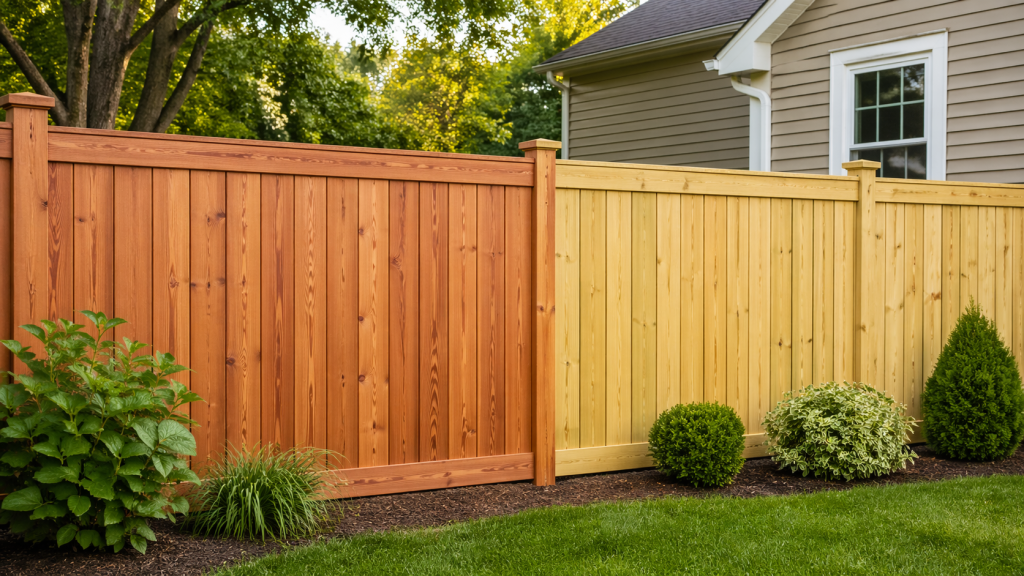
If you’ve started getting quotes for a wood fence in Yorktown Heights, you’ve almost certainly run into the same question at some point: cedar or pressure-treated pine?
Both are solid choices. Both are widely used across Westchester County. But they are not interchangeable — and the wrong choice for your specific situation can mean more maintenance, more money, or a fence that doesn’t age the way you hoped.
This guide breaks down exactly how cedar and pressure-treated pine compare when installed in Yorktown Heights — where winters are hard, summers are humid, and properties tend to have the space to make the decision matter.
Why Wood Fencing Fits Yorktown Heights So Well
Yorktown Heights sits in a part of northern Westchester County where the landscape does a lot of the talking. The area’s rolling terrain, mature trees, and generously sized residential lots create a setting where wood fencing looks completely at home in a way that vinyl or chain-link sometimes doesn’t.
Neighborhoods like Amawalk, Granite Springs, Jefferson Valley, Shrub Oak, and Crompond are all part of the greater Yorktown Heights area, and homeowners across all of them tend to reach for wood when it comes time to fence a backyard, define a boundary, or add privacy along a shared property line.
The climate here, however, makes material selection more than just an aesthetic decision. Yorktown Heights sits in USDA Hardiness Zone 6b, which means genuine winters with multiple freeze-thaw cycles, wet springs, humid summers, and fall conditions that test how well any wood handles fluctuating moisture levels. The wood species you choose — and the quality of the installation — will determine how well your fence holds up through all of it.
Cedar vs Pressure-Treated Pine: The Core Differences
Before getting into specifics, here is the honest summary:
Cedar is the premium choice. It is naturally rot-resistant, dimensionally stable, and beautiful right out of the gate. It costs more upfront but typically lasts longer and holds its appearance better over time with less intervention.
Pressure-treated pine is the practical, budget-conscious choice. Chemical preservatives give it solid resistance to rot and insects. It costs significantly less per linear foot but is more prone to warping, requires more active maintenance, and doesn’t quite match cedar’s visual appeal.
Most experienced fence contractors — including our team — will tell you the same thing: use pressure-treated pine posts regardless of which species you pick for the boards, because pine handles ground contact better. For everything above ground, the cedar vs pine decision comes down to your budget, your timeline, and how hands-on you want to be with maintenance.
Let’s go deeper on each.
Cedar Fencing in Yorktown Heights
What Makes Cedar Stand Out
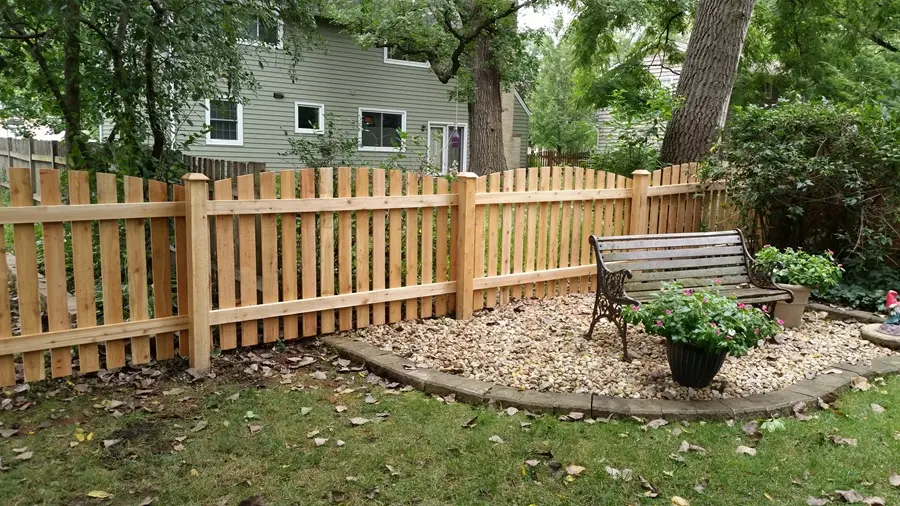
Western Red Cedar — the most common species used in residential fencing — contains natural oils that repel moisture, resist rot, and deter insects without any chemical treatment. That’s a meaningful advantage in the Westchester climate, where humid summers create exactly the conditions wood-boring insects and mold prefer.
Cedar is also dimensionally stable. Unlike pressure-treated pine, which can shrink, warp, or develop splits as it dries out after treatment, cedar boards hold their shape well through seasonal changes. After a Yorktown Heights winter with its freeze-thaw cycles and spring thaw moisture, a cedar fence typically looks and functions much the same as it did when installed.
From an appearance standpoint, cedar wins easily. It has a warm reddish-brown tone, fine grain, and smaller, tighter knots. It looks finished from day one without needing paint or stain to be presentable — though sealing it will deepen the color and extend its life.
How Long Does Cedar Last Here?
A cedar fence installed correctly in the Westchester County climate, sealed periodically, and given basic maintenance can realistically last 20 to 30 years. Some installations exceed that, particularly when heartwood-grade boards are used and the fence is re-sealed every two to three years.
That longevity makes cedar genuinely competitive on a cost-per-year basis, even though the upfront price is higher.
Cedar Maintenance Requirements
Cedar is not maintenance-free, but it is low-maintenance. Here’s what responsible care looks like:
- Year 1: No sealing needed right away. Let the wood settle and dry fully for 30 to 60 days after installation before applying any finish.
- Every 2–3 years: Apply a quality wood sealer or semi-transparent stain to protect against UV graying and moisture penetration.
- As needed: Inspect posts for any signs of movement, check gate hardware for alignment, and clear any debris or mulch that sits against the base of the fence.
If left completely untreated, cedar will gradually gray to a silver tone — which many homeowners in Yorktown Heights actually prefer for its natural, weathered look. It won’t rot quickly untreated the way pine will, but sealing it does significantly extend its lifespan.
Pressure-Treated Pine Fencing in Yorktown Heights
What Pressure-Treated Pine Does Well
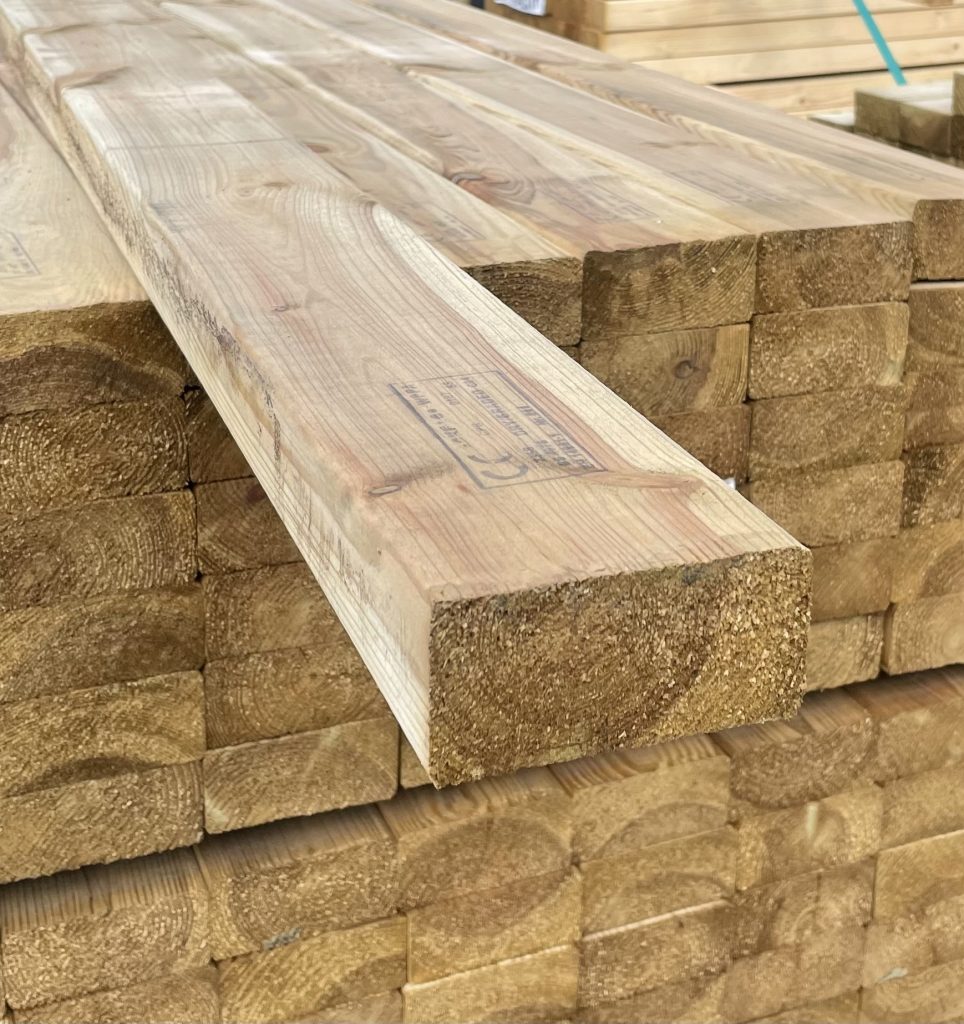
Pressure-treated pine starts as Southern yellow pine — a fast-growing, dense softwood — and is then infused with copper-based preservatives under pressure. This process pushes the treatment deep into the wood fibers, giving it real resistance to rot, fungi, and termite damage that untreated wood simply doesn’t have.
For fence posts specifically, pressure-treated pine is actually the preferred material among most professional fence contractors, including us. Because posts are embedded in the ground where moisture contact is constant, cedar posts would degrade faster than treated pine in that position. A common hybrid approach is treated pine posts with cedar boards — giving you the best of both materials where each performs best.
As a board material for the visible portions of a fence, pine is a reliable choice for homeowners who want a functional, durable fence at a more manageable cost, and who are willing to put in the maintenance work to keep it performing.
The Honest Downsides of Pine
Pine has real trade-offs that are worth understanding before committing.
Warping and shrinking. Pressure-treated pine is wet when it comes from the lumber yard — the treatment process soaks the wood thoroughly. As it dries out over the weeks and months after installation, it can shrink, warp, cup, or develop surface cracks. This is normal, but it can affect the fence’s appearance, especially in the first year. Properly spaced boards and quality installation reduce this, but it won’t be eliminated entirely.
Appearance. Fresh pressure-treated pine has a greenish tint from the copper preservatives. This fades over time, but the initial look is less warm and appealing than cedar. Pine also has larger, more prominent knots and a coarser grain. It can be stained to improve its appearance significantly, but that adds to maintenance.
Maintenance commitment. Pine requires more active care than cedar. It should be cleaned annually and sealed or stained every one to two years to prevent moisture damage and graying. Skipping maintenance cycles shortens its life noticeably.
Lifespan. A well-maintained pressure-treated pine fence in the Westchester climate can last 10 to 20 years. Poorly maintained, you might see significant deterioration in 8 to 12 years.
Side-by-Side Comparison for Yorktown Heights Homeowners
Factor | Cedar | Pressure-Treated Pine |
Upfront cost (installed) | $28–$48/linear ft | $20–$36/linear ft |
Expected lifespan | 20–30 years | 10–20 years |
Warping / shrinking | Minimal | More likely, especially year 1 |
Maintenance frequency | Every 2–3 years | Every 1–2 years |
Appearance out of the box | Warm, rich, attractive | Greenish tint, fades over time |
Natural rot resistance | Yes — no chemicals needed | No — requires treatment |
Best for fence posts | No (use PT pine in ground) | Yes |
Best for fence boards | Yes | Yes, with more maintenance |
Environmental impact | Lower — no chemical treatment | Higher — copper preservatives |
Get a Free Estimate From Quality Fence, Inc.
Quality Fence, Inc. install wood fences throughout Yorktown Heights and the surrounding Westchester communities — including Amawalk, Granite Springs, Shrub Oak, Jefferson Valley, Crompond, and beyond. We know the terrain, the permit process, and which materials perform best in this climate.
Whether you’ve already decided on cedar or you want help comparing your options in person, we’re happy to come out, look at your property, and give you a straight answer with a written estimate.